
Revere Ware Percolator vs Whistling Tea Kettle: Which Classic Brewer Belongs in Your Kitchen?
Both the Revere Ware percolator and our whistling tea kettle have earned loyal followings over decades, but they serve fundamentally different roles in the kitchen. One brews coffee through a circulation method that extracts bold flavor, while the other heats water for tea, pour-over coffee, or instant meals with a cheerful whistle when ready.
Choosing between them isn't about quality—both share our copper-bottom construction and stainless-steel durability—but about which brewing ritual fits your household. We'll walk through how each vessel works, what each does best, and which situations call for one over the other.

How Each Vessel Actually Brews or Heats
A percolator cycles boiling water up through a central tube, over coffee grounds in a basket, then back down to repeat the process until the brew reaches your preferred strength. You control steeping time by watching the glass knob on top—once the liquid turns dark amber, the coffee is ready.
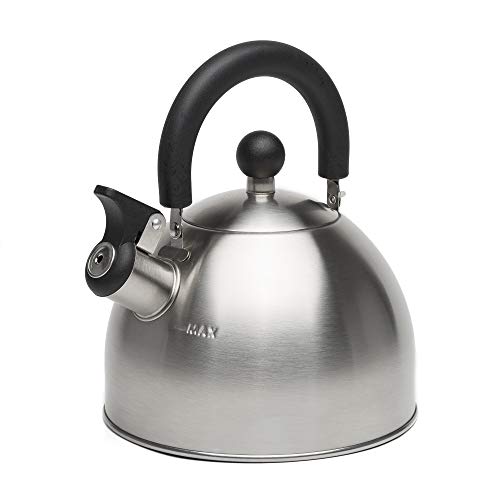
A whistling tea kettle simply heats water to a rolling boil, then signals with a whistle when steam pressure builds. You pour that water over loose tea, a tea bag, instant oatmeal, or into a pour-over cone—the kettle itself doesn’t steep anything.
Why the Copper Bottom Matters for Both
Both vessels rely on our copper-bottom heat distribution to prevent scorching and deliver even warmth across the base, whether you’re circulating coffee or bringing two quarts of water to temperature in half the time of a thin-walled pot.
Capacity and Serving Size
Our percolators typically brew 8 to 12 cups of coffee in one cycle, making them ideal for households that drink multiple cups in the morning or hosts who serve coffee to guests. Once brewed, the percolator keeps coffee warm on low heat without the burnt taste that comes from leaving drip coffee on a hotplate for hours.
Whistling kettles hold 2 to 3 quarts—enough for a full pot of loose-leaf tea, several French-press servings, or a quick boil for cooking tasks like blanching vegetables or rehydrating dried mushrooms. If you drink one cup of tea at a time, you’ll reheat the kettle throughout the day; if you host afternoon tea for four, you’ll appreciate the larger reservoir.
Maintenance and Longevity Considerations
Percolators require disassembly after each use—remove the stem, basket, and spreader plate to rinse away coffee oils and grounds. Hard water can leave mineral deposits inside the tube over time, so periodic vinegar cycles keep the circulation path clear. The glass knob is the only breakable component; replacement knobs fit all our percolator lids.
Whistling kettles need only a rinse after each boil, though the spout should be wiped dry to prevent mineral buildup around the whistle mechanism. The copper bottom on both vessels will develop a patina unless polished regularly; if yours has already darkened, a simple cleaning routine restores the original shine without harsh chemicals or abrasive scrubbing.
When to Choose the Percolator
Reach for a percolator when you want strong, hot coffee ready all at once and kept warm for an hour or more without reheating. Campers and RV travelers prefer percolators because they work on any heat source—gas stove, electric coil, even a campfire grate—and eliminate the need for paper filters or pods.
Percolators also suit anyone who enjoys the ritual of watching coffee brew through the glass knob, adjusting heat to control extraction speed, and serving directly from the pot. If your household drinks tea, instant beverages, or pour-over coffee more often than percolated coffee, the percolator will spend most of its time in the cabinet.

When the Whistling Kettle Makes More Sense
A whistling tea kettle serves as the universal hot-water tool—tea drinkers rely on it daily, but so do pour-over coffee enthusiasts, instant-soup eaters, and cooks who need boiling water for pasta or blanching on short notice. The whistle prevents dry-boiling accidents if you step away while water heats, a safety feature percolators lack.
Kettles also heat faster than percolators because they don’t circulate liquid through a brewing cycle—two quarts reach a rolling boil in under five minutes on a gas burner. For vintage collectors, certain older kettle models have become sought-after pieces, but even new production kettles deliver the same dependable performance that made the originals endure.
Matching the Right Brewer to Your Routine
If your mornings revolve around a full pot of strong coffee that stays hot while you read the paper or get ready for work, the percolator delivers that ritual with zero waste and decades of reliable service. If you drink tea, pour-over coffee, or need boiling water for a dozen different kitchen tasks throughout the day, the whistling kettle earns its stovetop spot through sheer versatility.
Many of our customers eventually own both—one for Sunday brunch coffee service, the other for daily tea and cooking—but if you’re choosing just one to start, let your household’s actual drinking and cooking habits decide. According to the FDA’s food-safety guidance, both vessels reach temperatures well above the 160-degree threshold for safe beverage preparation, so either choice meets basic safety standards for home brewing.
Common Questions About Revere Ware Percolators and Whistling Kettles
Yes, but a whistling kettle does that job more efficiently. A percolator's tube, basket, and spreader plate create unnecessary drag when all you need is boiling water, and the glass knob can crack from thermal shock if you boil it dry by mistake. The kettle heats faster, signals when ready, and cleans up in seconds.
Neither vessel works on induction unless the base contains a magnetic layer, which our traditional copper-bottom models do not. Both work perfectly on gas, electric coil, and radiant glass stovetops. If you've switched to induction, look for our tri-ply stainless lines that incorporate a magnetic disk.
On the lowest burner setting, a percolator keeps coffee between 160 and 180 degrees Fahrenheit for one to two hours without scorching, far longer than a glass carafe on a warming plate. After two hours, flavors begin to turn bitter as oils break down from prolonged heat.
The whistle mechanism is a simple two-tone reed activated by steam pressure, with no moving parts to break. Mineral buildup from hard water can muffle the sound if deposits clog the vent holes; soaking the spout in vinegar once a month prevents that. Otherwise the whistle lasts as long as the kettle itself.
Technically yes—place loose tea in the basket and let it circulate—but the result tastes over-extracted and bitter because tea leaves release tannins when boiled repeatedly. Tea needs a single steep at the correct temperature, not a boil cycle. Use the kettle to heat water, then pour it over tea in a separate pot or cup.
The whistling kettle reaches a rolling boil one to two minutes faster than a percolator brewing a full pot of coffee, because the kettle only heats static water while the percolator must pump liquid through the tube and grounds multiple times. Both benefit from the copper bottom's even heat spread, but the kettle's simpler task gives it the speed advantage.