
Revere Ware Stock Pot vs Dutch Oven: Which Heavy-Duty Workhorse Belongs in Your Kitchen?
Walk into any serious home kitchen and you’ll find at least one tall, heavy pot capable of handling everything from Sunday stock to weeknight chili. The question isn’t whether you need that kind of workhorse cookware — it’s which shape delivers the results you’re after.
We make both stock pots and Dutch ovens, and we field this question constantly: stock pot vs dutch oven, which one first? The answer hinges on three things — the volume you cook most often, whether you need oven capability, and how you store your gear. This guide walks through each consideration so you can decide with confidence.

Shape and Capacity: Tall vs Wide
A stock pot stands taller and narrower, maximizing liquid capacity without claiming too much stovetop real estate. An eight-quart stock pot typically measures around nine inches in diameter and ten inches tall, giving you room for a whole chicken carcass plus aromatics while leaving three burners free.
A Dutch oven sits lower and wider — that same eight-quart capacity spreads across a ten- or eleven-inch base and stands only six inches tall. The broader footprint means better contact with the burner, which matters when you’re searing a roast or browning onions before adding liquid.
If you make large-batch stock, soup, or pasta for a crowd, the stock pot’s vertical walls reduce evaporation and let you fit tall ingredients without tilting the lid. If you braise, bake bread, or brown meat before simmering, the Dutch oven’s wide base and oven-safe construction handle those tasks without transferring between pans.
Heat Distribution and Retention
Stock pots excel at bringing water to a boil quickly and holding a steady simmer. The taller walls and lighter construction — often stainless steel or aluminum core — mean faster heat-up times and responsive temperature changes when you adjust the burner.
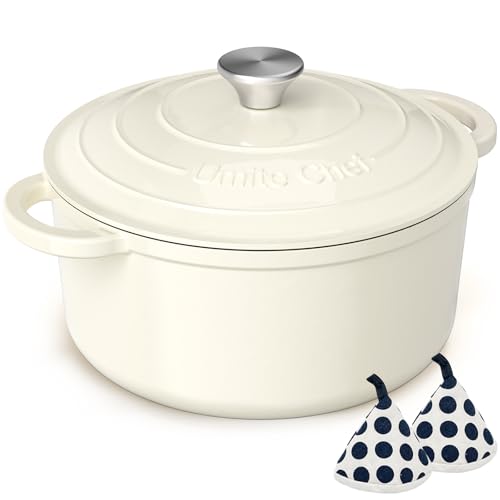
Dutch ovens, especially enameled cast iron models, heat more slowly but hold that heat longer and distribute it more evenly across the bottom and up the sides. That thick construction turns the pot into a mini-oven on your stovetop, ideal for recipes that call for long, gentle heat or a trip into the actual oven.
Our own Dutch oven line pairs tri-ply stainless construction with a heavy base, splitting the difference — you get cast-iron-level heat retention without the weight penalty, and the polished interior cleans up faster than enamel when tomato sauce bakes onto the walls.
Stovetop vs Oven Versatility
Every stock pot we make goes stovetop-only by design. The tall profile and lid shape aren’t built for oven use, and you don’t need oven capability when the job is boiling, blanching, or simmering on a burner.
Dutch ovens are oven-safe by default — lids fit tight, handles tolerate four hundred degrees or higher, and the low profile fits standard racks without blocking heat circulation. That makes them the go-to choice for no-knead bread, pot roast, and any braised dish that starts on the stovetop and finishes covered in the oven.
If you never bake or braise and most of your cooking stays on the burner, a Dutch oven’s oven capability sits unused. If you regularly move pots from stovetop to oven mid-recipe, a stock pot forces you to transfer everything into a separate roasting pan.
Storage and Handling Weight
Stock pots nest inside each other when you own multiple sizes, and even a twelve-quart model weighs under five pounds empty. That lighter construction makes them easier to lift when full and simpler to store in a cabinet stack.
Dutch ovens don’t nest — the wide base and thick walls mean each one claims its own shelf space. A six-quart enameled cast-iron Dutch oven weighs twelve to fifteen pounds empty, and maneuvering it in and out of a lower cabinet or oven becomes a two-hand job.
Our stainless stock pot collection includes sizes from six to sixteen quarts, all designed to stack without wasted cabinet height. If storage is tight or you cook alone and need to handle full pots without assistance, stock pots win on sheer practicality.

Which One to Buy First
If you make soup, stock, pasta, or blanch vegetables more than once a week, start with an eight-quart stock pot. It handles those tasks better than any other shape, and the price point leaves room in your budget for a Dutch oven later.
If you bake bread, braise meat, or cook one-pot meals that go from stovetop to oven, buy the Dutch oven first. A six-quart model covers most recipes without taking up oven space you need for side dishes, and you can always boil pasta in a smaller saucepan until you add a stock pot.
For kitchens with room and budget for both, buy the stock pot in a larger size — twelve quarts or more — and the Dutch oven in a mid-range size around six quarts. That pairing eliminates overlap and gives you the right tool for nearly every cooking method.
Pick the Shape That Matches Your Actual Cooking
The stock pot versus Dutch oven debate comes down to what you cook most often, not which piece looks better hanging on a rack. If your week includes soup, stock, or big-batch pasta, the stock pot earns its cabinet space every time you pull it out. If you braise, bake, or move pots from stovetop to oven, the Dutch oven handles those tasks in ways a stock pot simply can’t.
We’ve built both for decades, and the customers who use them hardest own one of each — a tall stock pot for liquid-heavy jobs and a wide Dutch oven for everything that needs oven heat or a searing-hot base. Start with whichever shape matches your current cooking routine, then add the other when your budget and storage allow.
Common Questions About Stock Pots and Dutch Ovens
You can braise on the stovetop in a stock pot, but you lose the oven option and the wider base makes browning meat less efficient. The tall walls also trap more steam, which can prevent proper caramelization during the searing step.
If your recipe calls for moving the pot into the oven, a stock pot won’t work — you’ll need to transfer everything into an oven-safe dish.
They work, but the wider shape increases evaporation compared to a tall stock pot, so you’ll need to add more water during a long simmer. The lower profile also makes it harder to fit a whole chicken carcass or large beef bones without crowding.
For occasional stock-making a Dutch oven is fine, but if you make stock weekly a dedicated stock pot saves time and liquid.
Stock pots heat faster because the thinner walls and lighter construction respond quickly to burner changes. A stainless or aluminum-core stock pot brings water to a boil in half the time of a cast-iron Dutch oven.
Dutch ovens take longer to preheat but hold that heat more evenly once they’re up to temperature, which matters more for slow braises than quick boils.
No — stock pot lids and handles aren’t rated for oven use, and the tall shape doesn’t provide the enclosed heat circulation that makes Dutch oven bread rise properly. The dough would bake unevenly and the pot itself could warp or release handle rivets under oven heat.
Bread baking requires an oven-safe Dutch oven with a tight-fitting lid.
Six quarts handles recipes for four people comfortably and fits standard oven racks without blocking heat to other dishes. Eight quarts works better for batch cooking, large cuts of meat, or families of five or more.
For stock pots, go larger — eight quarts minimum, twelve if you make stock or cook pasta for a crowd. The extra capacity costs little and you’ll use it.
Enameled Dutch ovens don’t require seasoning and won’t react with acidic ingredients like tomatoes or wine, but the enamel can chip if dropped and costs more upfront. Bare cast iron needs regular seasoning and can impart a metallic taste to acidic foods.
Stainless-clad Dutch ovens like ours split the difference — no seasoning, no reactivity, and a polished interior that releases food more easily than enamel after high-heat searing.